
Join Us!
Where environmental education meets team competition
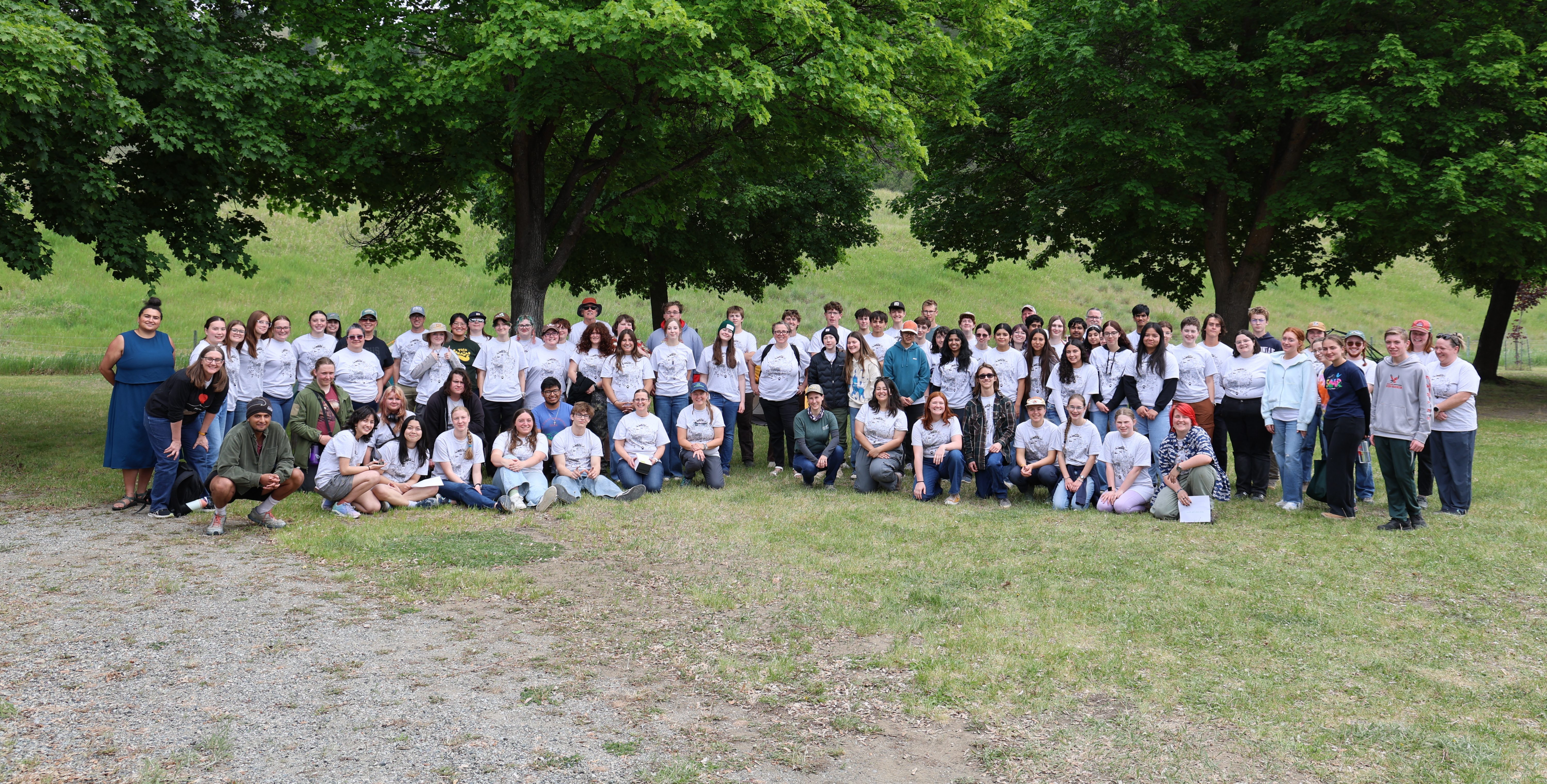
The Envirothon is a hands-on environmental problem solving competition for high-school aged students in the United States, Canada, Singapore, and China.
Teams train for and compete in five subject areas: Soils and Land Use, Aquatic Ecology, Forestry, Wildlife, and a rotating current environmental issue.
Envirothon is a unique opportunity for students to be exposed to many aspects of environmental science in a fun and hands-on group setting. It takes classroom learning to a new level by incorporating field professionals and a real-world look at these topics.


When I walk through a forest now, I feel so much more informed and aware of what’s happening around me.
— Turner Van Slyke, Walla Walla High School

Regional Competitions
In Washington, teams must compete in one of four regional events in order to qualify for the state competition. Regional events run from late March to late April.
WA State Competition
Top scoring teams from each region advance to the state competition. State is a two-day event that happens in late May, and the hosting county changes each year.
North American Competition
The winners of state will go on to represent WA at the NCF North American Envirothon in July, competing in a week-long event against teams from most US states and other countries.
We are a 501(c)(3) non-profit organization dedicated to helping conservation districts and partner groups conduct regional and state competitions, as well as supporting the NCF Envirothon, a North American competition.
Our mission is to provide resources for students and teachers, through education and teamwork, which promote environmental awareness, critical thinking, and active personal stewardship for the purpose of balancing the quality of life and the quality of the environment. We use the following goals as guides to developing effective curricula, educational resources, and testing scenarios:
- Promote a desire to learn more about the natural environment and equip students with the knowledge and skills needed to apply the basic principles and practices of resource management and ecology to complex environmental issues.
- Promote stewardship of natural resources and to encourage the development of the critical thinking, cooperative problem-solving, and decision-making skills required to achieve and maintain a natural balance between the quality of life and the quality of the environment.
- Provide students with experience in environmentally-oriented activities, enabling them to become environmentally-aware, action-oriented citizens.
