Washington State Envirothon recognizes that not all Washington schools offer competitive or comprehensive courses in environmental science and related subjects. To help even the playing field, we offer the following virtual resources for teams that cover most of the learning objectives for each test topic. Additionally, many Conservation Districts will have tools and other learning materials in borrowable study bins, or may organize free workshops with industry experts.
2027 Virtual Training Schedule:
Wildlife with Danny Kosiba – Feb 25th, 6-7:30pm (Registration link coming soon)
Soils – TBD
Aquatic Ecology – TBD
Forestry – TBD
What is the Oral Presentation?
The Oral Presentation portion of the WA State Envirothon competition offers teams a chance to address real-life environmental problems as presented through a written scenario. Teams will be given a written scenario based on the year’s current issue and will prepare a presentation ahead of the statewide competition. This is a great opportunity for teams to practice public speaking, problem solving, presentation skills and prepare for the testing stations of the competition.


How does it work?
Oral Presentations vary by region. In the Northwest region, teams receive the scenario two weeks before the competition and are expected to submit a powerpoint to accompany their presentation. In the South Sound region, teams receive the scenario on the day of the competition and have approximately one hour to create a poster board and talking points. The WA State Envirothon Oral Presentation will be similar to the Northwest regional format, where teams will receive the scenario ahead of time and prepare a powerpoint or physical poster board to support their presentation.
Oral Presentations are judged by 2-3 event volunteers and scores are averaged between the judges. Check out the rubric below for some things the judges will be keeping an eye out for.
Sample Oral Presentation Rubric
Other Resources
How to Research – Edutopia
Checklist for Evaluating Web Pages – University of South Carolina
Tips for Making Effective PowerPoint Presentations – National Conference of State Legislatures
Effective Slide Makeover Examples – Cathy Angell Communications
Oral Presentation Tips – Grand Valley State University
Advice to Students on Preparing for Oral Presentations – Boston University
You may find the following short videos helpful for practicing and preparing your presentation:
The 2027 Current Issue is Soil Health Management: Agricultural Principles and Stewardship.
Washington State Envirothon does not usually provide our own resources for the current issue, though some conservation districts may organize related workshops. Please refer to the materials linked below:
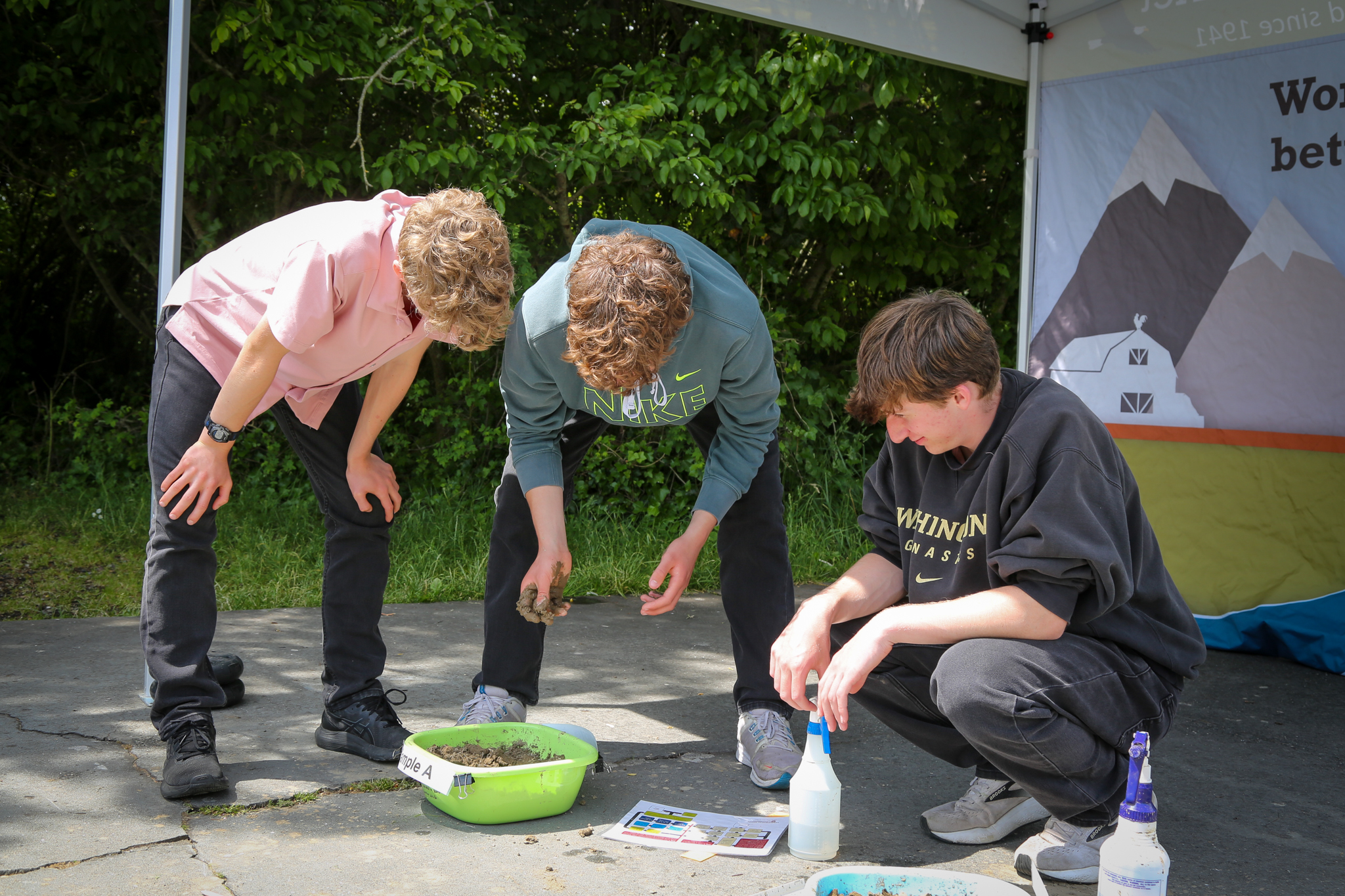
You may not pay much attention to it, but there is a lot going on underneath your feet! Soil is the foundation for all terrestrial life. Soil shapes our landscape. It nourishes plants – growing crops, grasses, and forests to form the basis of our food webs. It serves as a natural purifier for water, filtering out toxins and pollutants. It helps to recycle nutrients and provides habitat for fungi, microbes, and fossorial animals. The health of the soil is essential to the health of terrestrial ecosystems and to our way of life.
NCF Soils & Land Use Learning Objectives

Use this online course to learn Envirothon Soils topics at your own pace. Includes built in quizzes and activities.
This 2018 documentary from the Soil Health Institute features innovative farmers and soil health experts from throughout the U.S.
These WA-based organizations may have more resources or experts to contact:
Plant communities shape our world. Forests comprise 30.8 percent of global land area (Food and Agriculture Organization of the United Nations, 2020), while grasslands and rangelands make up approximately 50 percent of Earth’s terrestrial surface (National Institute of Food and Agriculture, USDA). Humans rely on the biodiversity of forests for many services, including timber for homes, wood pulp for paper, biochemical models for future medications, recreation, aesthetic beauty, and countless others. Grasslands and rangelands are home to unique species such as bison and prairie dogs, and they provide fertile land to grow our crops and to raise livestock that are critical to feeding the world’s human population. A good understanding of plant biology, forest and grassland ecology, and human impacts to these ecosystems will help to inform good management practices to conserve these areas for future generations.
NCF Forestry Learning Objectives

Here is the recording of the 2021 Forestry training organized by the NW Region:
We’ve also compiled a YouTube playlist of forestry-related videos:
These WA-based organizations may have more resources or experts to contact:
Wildlife may be the first topic that comes to mind when you think of conservation: the panda, the elephant, the snow leopard, the grey wolf, the bald eagle, or any other well-known current or former endangered animal. These charismatic species are easy to rally behind, but the wildlife in your backyard or local park need the same basic resources as a rhinoceros: food, water, shelter, and space. Conservation for local wildlife is just as important as conservation for big-name species in exotic locales. Through understanding wildlife biology, ecology, and conservation, humans can reduce our negative impacts to wildlife and implement management strategies to help species thrive, both locally and globally.
NCF Wildlife Learning Objectives

Use this online wildlife course to learn Envirothon Wildlife topics at your own pace. Includes built in videos, quizzes, and activities.
Check out this 2021 Wildlife training put on by the South Sound Region with Wolf Haven International:
We’ve put together a YouTube playlist of wildlife videos, including the specimens from the Puget Sound Museum of Natural History (formerly known as the Slater Museum).
These WA-based organizations may have more resources or experts to contact:
From vast oceans and tiny streams to irrigation systems and kitchen sinks, water touches every aspect of our lives. This essential compound makes life on Earth possible, and to continue to sustain this life, we must protect our water resources. Aquatic ecosystems are diverse, as are the creatures that inhabit them. All water on Earth, whether it is flowing in a river or deep underground in an aquifer, is connected through the water cycle. As a result, human impacts on our water resources can have far reaching effects, and careful consideration must be taken when making management decisions.
NCF Aquatic Ecology Learning Objectives

Below is the 2022 Aquatic Ecology Virtual Training put on by Snohomish County and the Northwest Region:
Here’s our Aquatic Ecology YouTube playlist:
These WA-based organizations may have more resources or experts to contact:
Borrow a Study bin!
Some Conservation Districts have study bins available for teams to borrow in the fall and winter before the regional competitions. Contact your CD to see what resources they offer! Here is an example of what Snohomish’s study bins look like: